
FAQ Guide for Mask Machine Buyers
Choosing a mask making machine is a production decision, not only a product search. Buyers need to match the machine with the mask type, material structure, target output, factory utilities, operators, quality checks and export plan. This FAQ guide is written for overseas buyers who are comparing a mask machine supplier or mask machine manufacturer for a new line, an additional line or a replacement project.
Exact capacity, dimensions, power, voltage, tooling and delivery time must be confirmed for the selected model and configuration. The questions below help buyers prepare a clear request before contacting a supplier. For a starting point, review the LIAN Machinery home page, the Mask Machine category and the เครื่องผลิตหน้ากากทรงถ้วย N95 อัตโนมัติ (Automatic N95 Cup Mask Machine) page.

1. Which mask machine type should a buyer choose?
The first question is the finished product. A flat mask production line, fish shape mask line, N95 cup mask line and folding mask line do not use exactly the same forming, welding, cutting or output arrangement. A buyer should provide a finished mask sample or drawing, the number of layers, ear loop style and required packaging format. If the project includes downstream packing, discuss the packing machine at the same time so the complete mask production line can be planned as one workflow.
Flat mask equipment is commonly evaluated for mask body forming, nose wire insertion and outer or inner ear loop welding. Fish shape and folding mask equipment requires closer attention to forming tools, folding geometry and cutting accuracy. N95 cup mask equipment may include cup forming, welding, valve-related processing or additional assembly steps depending on the model. The right comparison is therefore based on product and process, not only on a machine name.
2. How should capacity be evaluated?
Capacity should be discussed as a project requirement and then confirmed against the selected machine. Ask whether the stated figure is a theoretical speed, a normal operating range or an output measured with a specific material and product configuration. Also ask how quality inspection, roll changes, material adjustments, maintenance stops and packing affect usable output. A lower but stable output can be more valuable than an unsupported maximum number.
Give the supplier your target masks per minute, working hours per day, number of shifts, expected order volume and acceptable scrap level. If several machines will be connected, request a line-level view rather than evaluating each machine separately. This allows the supplier to identify the slowest process, the required buffer space and the most practical operator arrangement.
3. Which materials and finished products must be confirmed?
Material compatibility affects feeding, forming, welding and finished mask appearance. Buyers should provide the material type, layer structure, roll width, approximate weight, core size and any special coating or treatment. For disposable masks, the material discussion may include spunbond layers, meltblown filtration material, nose wire, ear loop elastic and packaging materials. These details help the mask machine manufacturer identify whether standard feeding and tooling are suitable.
Samples are especially useful when the product has a special shape, color, edge treatment or ear loop position. Send clear photos and, where possible, a physical sample or drawing. Do not assume that two materials with the same appearance will run in the same way. Final material specifications and machine settings should be confirmed during technical review and quotation.
4. What voltage and factory conditions are needed?
Before ordering, confirm the destination country, available voltage and frequency, phase arrangement, electrical standard and preferred control language. The factory should also prepare a level floor, safe access for loading, enough space for material rolls and finished product handling, and a suitable location for the control cabinet. Do not plan only for the machine footprint. Leave working space for operators, inspection, cleaning, maintenance and future material movement.
Ask for the confirmed machine dimensions, approximate weight, utility requirements and recommended workshop layout. The layout should show material loading, operator position, product flow, packing, inspection and a safe route for incoming and outgoing goods. If a buyer is expanding an existing workshop, provide photos, floor dimensions and door or lifting limits before the final configuration is approved.
5. Why is the ultrasonic welding system important?
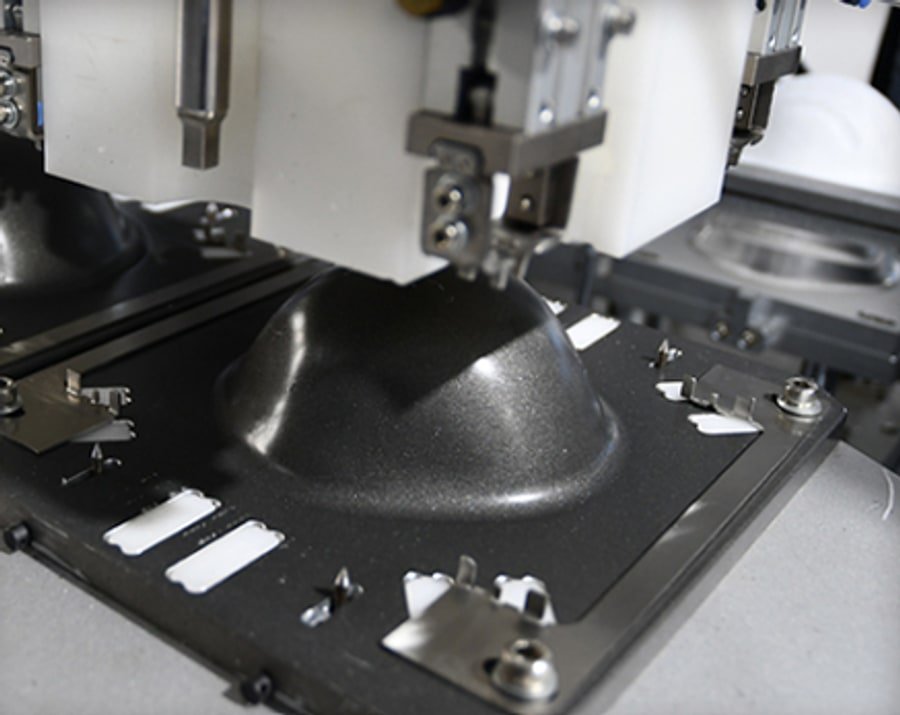
Ultrasonic welding is used in many mask production processes, including ear loop welding and other nonwoven joining operations. Buyers should ask which parts of the product use ultrasonic welding, how the welding position is adjusted, what tooling is included and how operators check the weld. Consistent results depend on material, pressure, alignment, tooling condition and operating settings, so a supplier should explain the adjustment and inspection approach.
Request photos or a short demonstration of the relevant welding station if the process is important to your product. The quotation should make clear whether spare horns, fixtures or other wear parts are included, and which items are recommended for routine maintenance. Avoid judging welding quality from a catalog image alone; confirm it with your sample and acceptance requirements.
6. What should be included in installation and training?
Installation planning should cover unloading, positioning, assembly, electrical connection, material loading, trial running and operator instruction. Clarify whether the supplier provides remote guidance, on-site support, manuals, videos or commissioning assistance. The buyer should nominate operators and maintenance contacts before delivery so training time is used efficiently.
7. How should maintenance and spare parts be planned?
A reliable line needs a maintenance plan from the first day. Ask for recommended inspection intervals, lubrication points, cleaning instructions and the expected service life of common wear parts. Keep records for ultrasonic components, cutters, belts, sensors, rollers, bearings and electrical control parts where applicable. The exact list depends on the model, so request a model-specific spare parts recommendation rather than a generic package.
For overseas buyers, spare parts availability and response time are part of supplier evaluation. Confirm how replacement parts are identified, how troubleshooting information is shared and whether the supplier can support remote diagnosis. A clear machine nameplate, electrical drawing and parts list can reduce downtime when a replacement is needed.
8. What should be checked during acceptance?
Before shipment, agree on a practical acceptance checklist. It may include machine appearance, control functions, material feeding, product forming, welding quality, cutting position, counting, emergency stop, noise or vibration observations and finished sample output. Use the buyer sample and confirmed configuration as the reference. Any project-dependent item should be written clearly instead of being assumed.
Request test photos, videos or an inspection record when appropriate. If a third-party inspection is required, define the timing and scope before production is completed. Acceptance is easier when the buyer, supplier and inspector use the same sample, settings and criteria.
9. How are packing, transport and delivery time handled?
Export packing should protect the machine during handling, storage and ocean or land transport. Ask whether the machine is wrapped, fixed, moisture protected and packed in an export wooden case where required. Confirm case dimensions, gross weight, loading method, shipping marks and the documents needed by the destination country. LIAN shipment examples can be reviewed on the Shipment Cases page.
Lead time depends on model, configuration, material availability, tooling, production schedule, testing, packing and shipping arrangements. Ask for the expected production milestone, test date and ready-to-ship date. Do not treat a general catalog lead time as a guaranteed delivery date until the final configuration and order terms are confirmed.
10. What information should be included in a quotation request?
- Target finished product and clear sample photos or drawings.
- Material layers, roll width, approximate weight and supplier material information.
- Target output, working hours, shifts and expected order volume.
- Destination country, voltage, frequency, phase and factory constraints.
- Required automation, packing method, inspection scope and delivery terms.
- Installation, training, spare parts and after-sales support expectations.
A complete inquiry helps a mask machine supplier answer with fewer assumptions. It also makes it easier to compare quotations from different suppliers because the product, material, output and support requirements are described consistently.
Buyer FAQ
Should I buy a single machine or a complete mask production line?
Choose according to the process you need to complete. If material feeding, mask forming, welding, inspection and packing must work together, ask for a line-level proposal. If you already have upstream or downstream equipment, provide its interface requirements before selecting a single machine.
Can the machine be customized for my product?
Some configurations, tooling and feeding arrangements may be adjusted, but customization depends on the product design and machine model. Send a sample or drawing and ask the supplier to identify which items are standard and which require confirmation.
What is the safest way to compare capacity?
Compare the same product, material and operating conditions. Ask for the normal working range, test method, quality target and expected stops. This gives a more useful comparison than looking only at a maximum number.
What should I prepare before installation?
Prepare the confirmed layout, power connection, lifting and unloading plan, sample materials, operators, maintenance contact and safe working area. Confirm whether air, special tooling or other utilities are required for the selected configuration.
How can I reduce risk before placing an order?
Use a written specification, sample-based acceptance checklist, confirmed support scope and export packing plan. Ask questions about any item that is not included in the quotation. A clear technical review is more valuable than relying on a general product description.
Contact LIAN for a project review
If you are comparing a mask machine supplier for a new factory, capacity expansion or replacement project, send your finished product details, material information, target output, destination and factory requirements to LIAN. Our team can help review the machine type, production flow, testing scope, packing plan and quotation requirements.
Need Help Installing a Mask Production Line?
Tell LIAN Machinery your target mask type, production line configuration, workshop conditions and installation requirements. Our team can help review practical preparation points for your project.